
Ballarat: From Gold Rush Roots to Lifestyle Destination
For most of its history, Ballarat has been defined by one thing: its past.
Born out of the 1850s gold rush and cemented by landmarks like Sovereign Hill (opened in 1970), the city has long been one of Australia’s most recognisable heritage destinations.
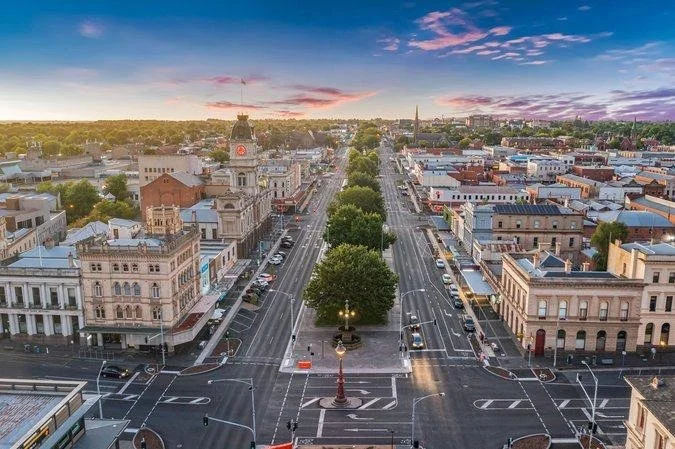
But what’s happening now is something different.
Over the past decade, and particularly since 2020, Ballarat has been quietly undergoing a shift from a place people visit to a place people actively choose to spend time, invest, and return to.
Ballarat’s transformation isn’t just anecdotal, it’s measurable. Tourism spend reached over $663 million in the year to March 2023, surpassing pre-COVID levels and setting a new benchmark for the region.
By 2024, that number had grown further, with more than 2.8 million domestic visitors contributing over $800 million annually to the local economy.
Even more telling is how people are visiting: Overnight stays are rising, day trips are increasing and visitors are spending more per trip
Back in 2013 to 2014, Ballarat attracted around 2.19 million visitors, meaning engagement has lifted materially over the past decade.
This isn’t just recovery, it’s expansion. For years, Ballarat’s appeal was largely historical. Now, it’s layered. The city has been steadily building a lifestyle offering that sits on top of that heritage base, and that’s where the real shift is happening.
In 2020, Ballarat was named one of Australia’s most liveable regional cities, reflecting a broader mix of employment, education, and lifestyle amenity.
More recently, the change has been cultural. There has been a clear acceleration in:
Food and wine
Events and festivals
Arts and creative industries
Hospitality precincts
The redevelopment of spaces like The Goods Shed near the train station has injected new life into the city, creating dining and social hubs more commonly associated with inner Melbourne.
At the same time, both long-standing venues and new operators are lifting the quality and diversity of the offering, from casual dining through to more curated food and wine experiences tied to the surrounding region.
One of the most important drivers of Ballarat’s evolution has been its events calendar.
Major drawcards like White Night, which launched in Ballarat in 2017, along with the Ballarat Begonia Festival and Winter Wonderlights, have helped reposition the city as more than a day-trip destination.
These events regularly attract large crowds and play a key role in extending overnight stays, which is a critical ingredient in building a sustainable lifestyle economy.
Once a place becomes somewhere people stay, not just visit, its perception starts to change. Perhaps the most interesting shift is who is coming to Ballarat and why. Historically, it attracted school trips, domestic tourists and history-focused visitors.
Now, there is a growing segment of Melbourne-based buyers, short-stay travellers and lifestyle-driven visitors. Ballarat is increasingly being viewed as a viable weekend escape, a short-stay investment location and a lifestyle alternative within commuting distance of Melbourne.
At around 75 to 90 minutes from Melbourne, it sits in a range that allows flexibility. Close enough to access, far enough to feel different.
Importantly, it offers something Melbourne often cannot: space, pace and relative affordability. From a property perspective, lifestyle evolution is often a leading indicator, not a lagging one.
Like many regional markets, Ballarat is navigating cost-of-living pressures impacting hospitality, workforce constraints, and the balance between growth and infrastructure.
Some venues have closed or restructured in recent years, highlighting that growth phases are rarely without friction. But this is often part of the maturation process, not a sign of decline.
Ballarat has always had strong fundamentals, what’s changing now is the overlay. It is moving from a heritage city with tourism appeal to a lifestyle destination with staying power.
The kind of place people do not just visit once, but return to, invest in, and increasingly build into their lives. Historically, that is where long-term growth stories tend to begin.